Explore the Old Quarter of Hanoi, Vietnam

“Hanoi’s bustling Old Quarter consists of over 70 streets selling everything from hand tailored suits to souvenirs. Visitors should not miss the Don Xuan Market; one of the largest and oldest covered markets in Hanoi.”

dong xuan market

Dong Xuan Market

Hanoi is a fast paced and colorful city where ancient culture and modern practices collide. Hanoi offers visitors a vastly different experience as opposed to Ho Chi Minh City due to its fusion of Chinese, Vietnamese and French influences. Although Hanoi is Vietnam’s second largest city most visitors tend to focus on the vibrant Old Quarter and the nearby Hoan Kiem Lake area .

A Visit to Hoan Kim Lake Hanoi

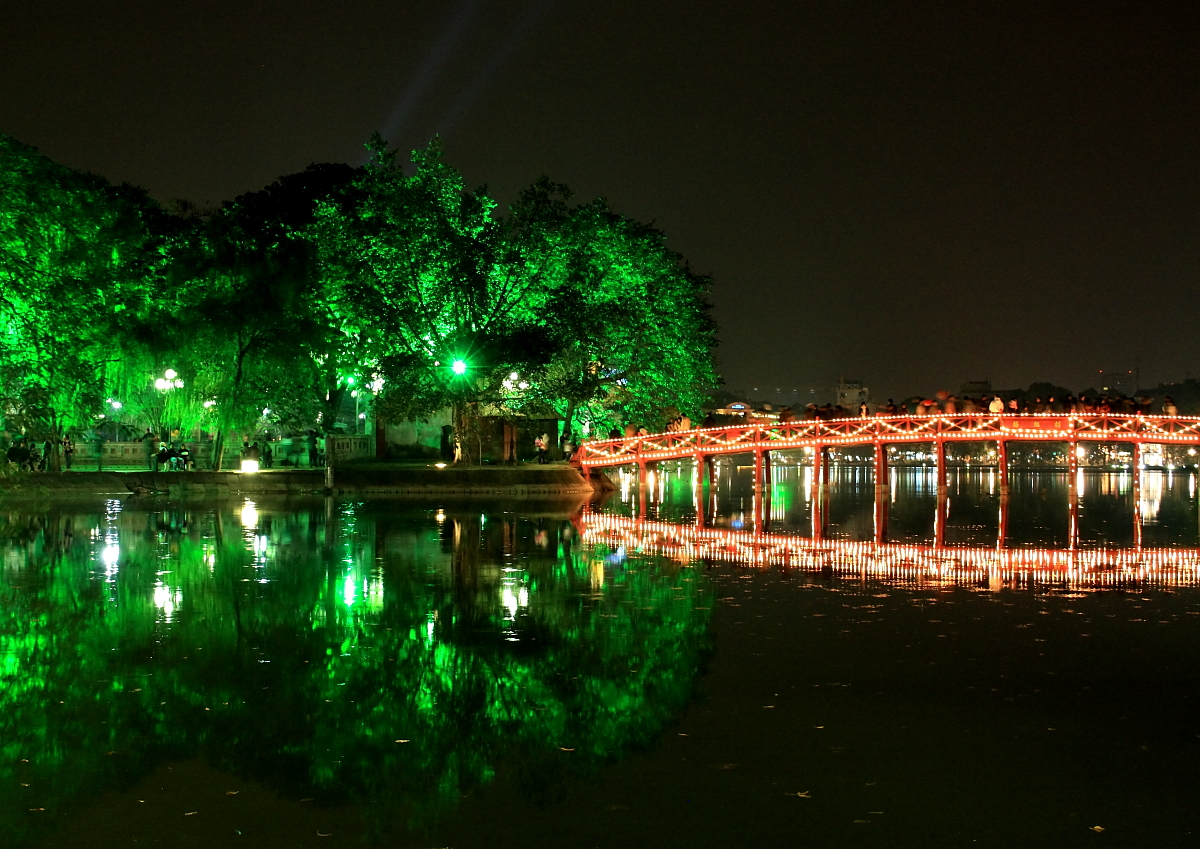
One of the most iconic images of Hanoi is Hoan Kiem Lake. It is a memorable experience to stroll around this scenic lake in the evening when the lights of the bridge and pagodas are lit up and reflected in the water. After a long day of sightseeing visitors can relax on one of the surrounding benches and enjoy an ice cream or a cup of coffee; a favorite pastime with locals as well as tourists. One of the most scenic images of Hoan Kiem Lake is the illuminated Bridge of the Rising Son that leads to the Ngoc Son temple.

Hanoi

Bridge of the Rising Son

Experience Hanoi’s rich cultural history by taking in a traditional Vietnamese show at the Thang Long Water Puppet Theatre, located across from Hoan Kiem Lake. This lively puppet show is a must see for any visitor to Hanoi. Puppeteers and live musicians enact traditional Vietnamese tales using intricately designed wooden puppets that splash and move across a watery stage.IMG_0537

Escape the crowds by ducking in for a cup of coffee at nearby Highland’s Coffee, located in the five story building overlooking Hoan Kim Lake. Anyone of the viewing decks in the building is a great place to watch the endless parade of scooters and crowds down on the street from high above.

Navigating Hanoi’s Old Quarter

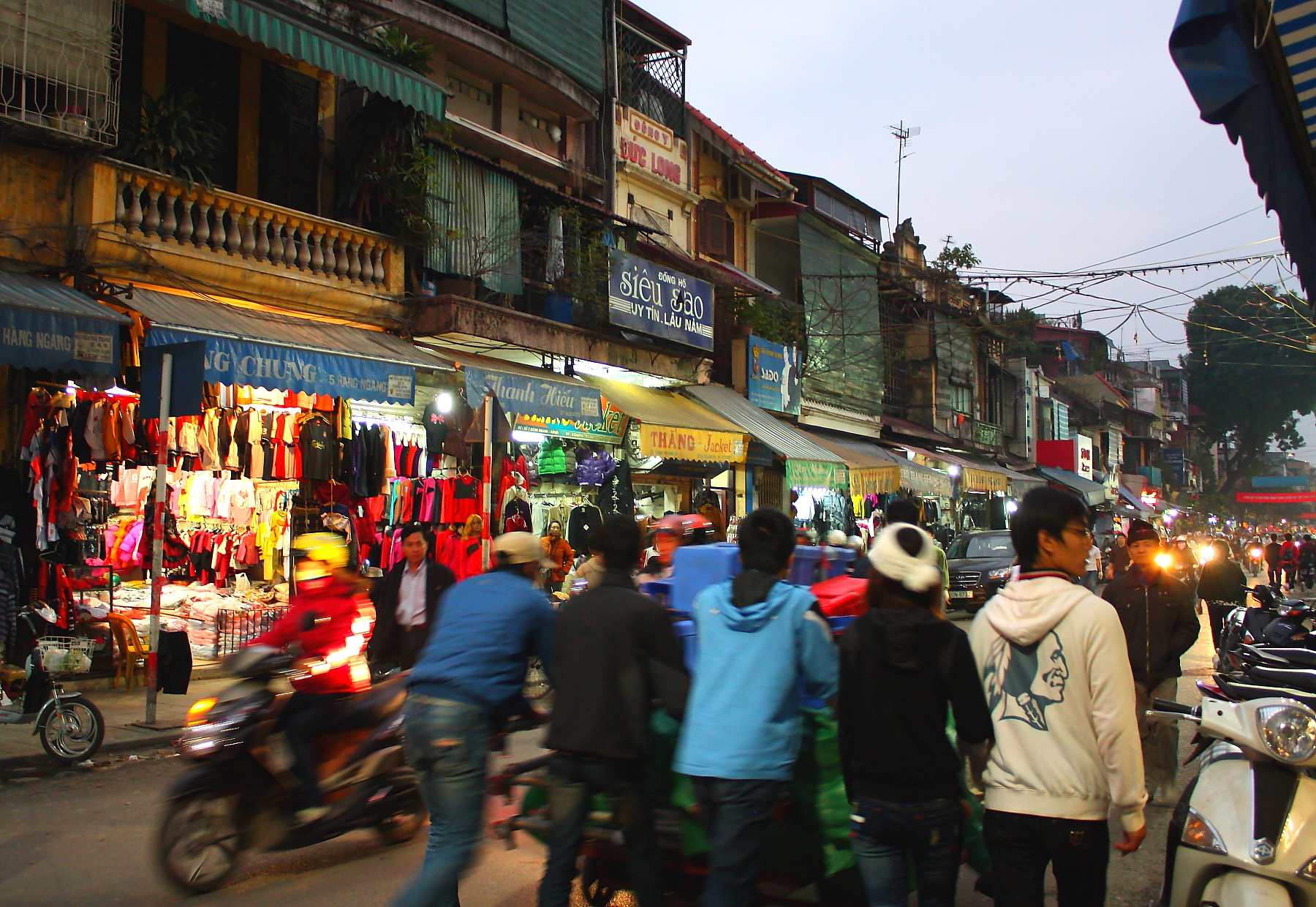
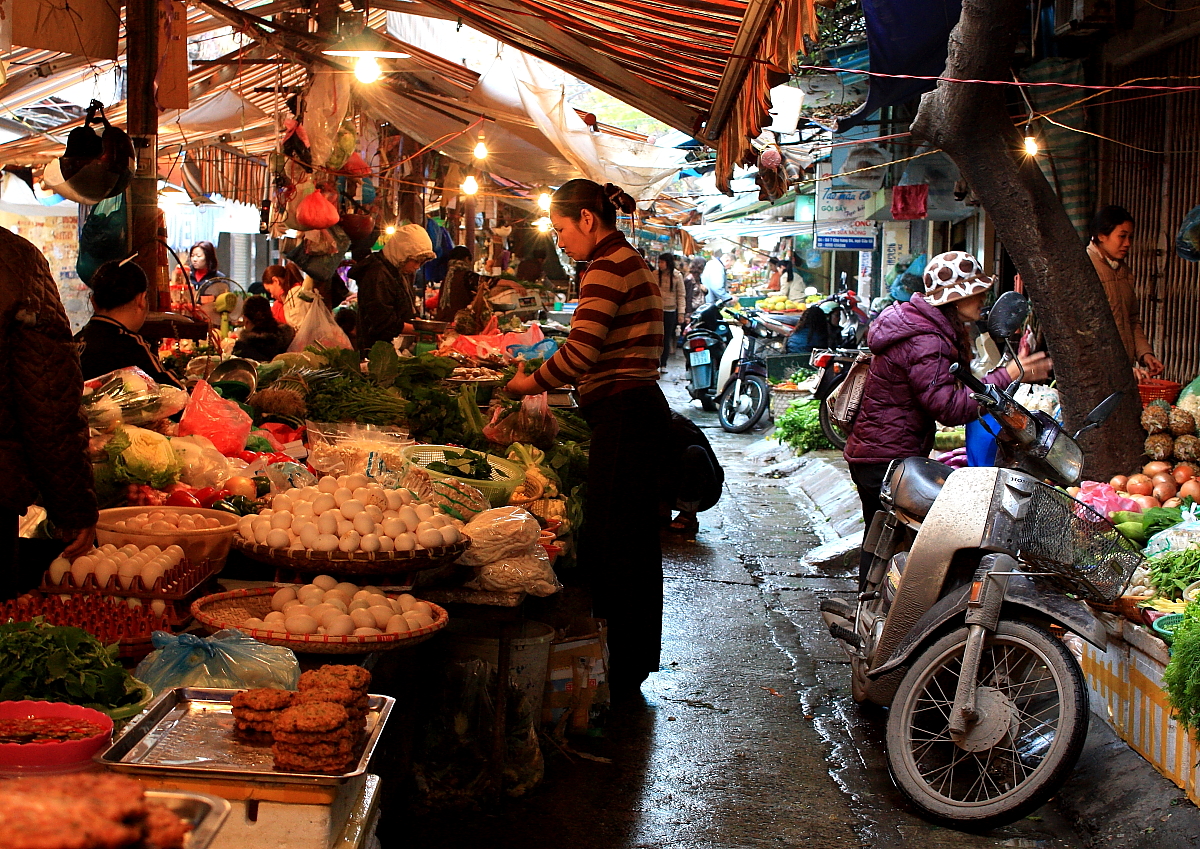
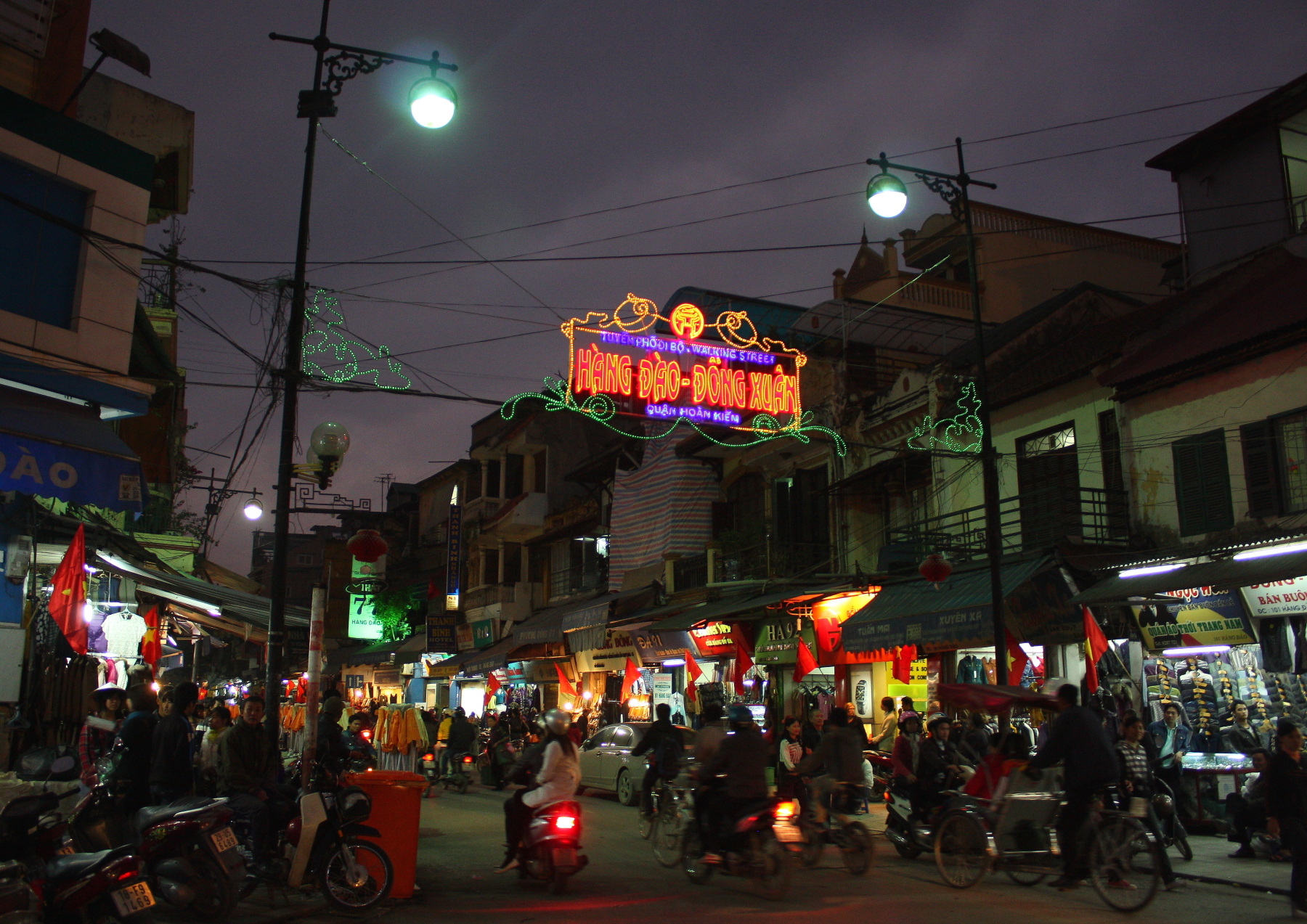
Hanoi’s Old Quarter is filled with a variety of colorful shops and markets. Traditionally many of the city streets are named after the items they sell. For example Hang Gai is known for items made of silk, Hang Ma sells paper decorations and Hang Bo sells baskets. This area is coined the original 36 streets as it refers to the original guilds established there and the items they sold and produced. Now the Old Quarter consists of over 70 streets selling everything from hand tailored suits to souvenirs. Located on the far northern end of the Old Quarter is the Don Xuan Market. This historical market is Hanoi’s largest and oldest covered market.

IMG_0405

Old Quarter Hanoi

One distinct feature of the Old Quarter is its unusual architecture. Many of the buildings are a fusion of Vietnamese and French influences. One style specific to Vietnam is called a tube house, these buildings line the Old Quarter streets and typically house a business on the ground level and the top floor is a narrow and tall tube-like living space.  Visitors to the Old Quarter will have to try the regional specialty Pho; a traditional noodle soup served with slices of beef or chicken and fresh bean sprouts. Pho is available at any number of crowded small store front restaurants that line the streets of the Old Quarter.

Getting Around Hanoi

IMG_0342

Scooter Girl Hanoi

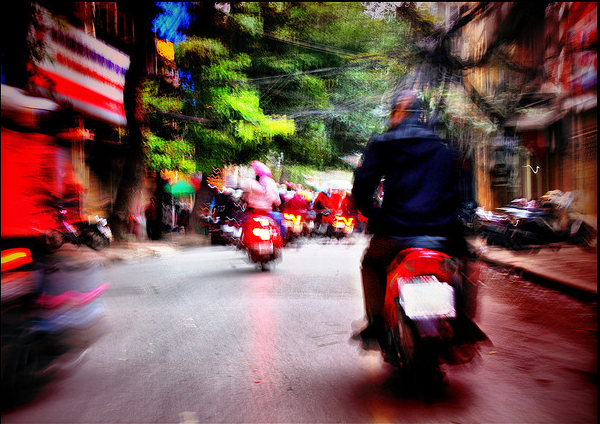
The Old Quarter is best explored by walking, but even those equipped with a detailed map and the best navigational skills will have a hard time maneuvering the streets according to plan. Part of the charm of Hanoi is getting lost in the maze-like streets lined with colorful shops and overflowing markets.

Aside from walking, an exciting way to tour the city center is by Cyclo. These bicycle or scooter driven taxis are fun and safe way to experience the lively and crowded streets. It is essential to negotiate the price before getting in to ensure the best deal.

Visitors to South Asia will enjoy Hanoi for its unique fusion of French, Chinese and Vietnamese influences, its endless shopping opportunities, and the hustle and bustle of every day life.

Chicago’s Haunted History

haunted

Haunted holidays and ghost tours are fast becoming a popular tourist pastime in many cities around the world, and Chicago is no exception. Even though Chicago is the third largest city in the United States, it certainly has its fair share of ghostly lore. Whether you believe in ghosts or not, these tours and tales are a fun way to learn about a city’s hidden history. There are a number of formal ghost tours to join in Chicago offering a glimpse into many of the most popular Chicago haunts including the site of the Fort Dearborn Massacre, the Iroquois Theater, the Hull House or Harpo Studios. Another option, not for the faint of heart, is to purchase a book on Chicago haunts and check out the following ghostly attractions such as Robinson Woods, Bachelor’s Grove and the Dunning Asylum Cemetery, on your own. These locations are a little bit less touristy but none-the-less reported to be among the most haunted locations in Chicago.

Robinson Woods; Indian Burial Ground

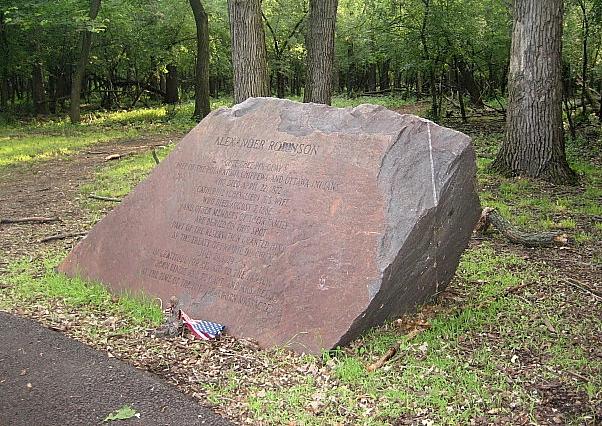
Chicago’s Indian Boundary woods are packed on the weekends during the summer; a popular recreation spot for hiking, fishing, biking and running. What many people don’t know is that these woods have a section dedicated as an Indian burial ground. In addition these woods harbor many dark secrets. The woods were once inhabited by Alexander Robinson, Chief Chee Chee Pin Quay and his family. Robinson was the Chief of the Potawatomi, Chippewa, and Ottawa Indian tribes. Robinson was an influential leader who lived in Chicago until his death in 1872. He was awarded this large wooded plot, located on Chicago’s Northwest side, for his heroic efforts in the Fort Dearborn massacre.

Now called Indian Boundary Division; the area is composed of Catherine Chevalier woods, Shiller woods, Che Che Pin Quay Woods and Robinson woods. Robinson used this area as his family home and as he and his family’s final resting place; aka the Indian Burial ground. After his death, the Robinson family continued to live in the woods off of Lawrence Avenue and E River Road. The family was well known in the community and supposedly threw wild parties that lasted well into the night. For reasons unknown the house burned to the ground in 1955. Robinson and his family are buried on these grounds, the graves marked by a single large boulder.

In the same year that the fire occurred, on October 18th, 1955, a more horrific discovery was made. The bodies of three boys; John and Anton Schuessler and Robert Peterson were found tied up, beaten, and murdered in a ditch near the picnic area in Robinson Woods. Despite many leads, the crime went unsolved for over 40 years. A witness finally came forward offering new evidence linking one of early suspects in the case. Kenneth Hansen, a local stable owner at the time of the Peterson-Schuessler murders, was found guilty of these horrific crimes in 1994 and was sentenced to up to 300 years in jail. To read more about this terrible tragedy check out the book by James A. Jack: “Three Boys Missing, The Tragedy That Exposed the Pedophilia Underworld .”

With such a dark past, it’s not surprising that Robinson Woods is listed as one of Chicago’s most haunted sights. Ghostly images of Native Americans and strange glowing orbs have been reported by many a passerby. Others report hearing a loud chopping noise similar to wood being cut with an axe. Spooky Indian drums, eerie voices and random floral scents are among the other reported phenomena. A large population of deer lives in the woods too. Most of the time large groups of them can be seen wandering around oblivious to the crowds of people. A strange but common reported occurrence is that the deer will follow and watch you at close range for an uncomfortably long period of time. Don’t believe it? There are miles of trails that branch out through the woods along both the site of the murders and right up to the burial grounds. Go for a walk on one of the secluded wooded trails at dusk and decide for yourself.

Bachelor’s Grove Cemetery

Bachelor’s Grove Cemetery located in Midlothian, a South Suburb of Chicago, has a dark reputation for being the most haunted graveyard in the entire country. This private cemetery dates back to 1864, and since its opening, over two hundred bodies have been laid to rest on its grounds. The last burial was as recent as 1965. Some claim the pond located on the grounds became a watery grave for many who crossed famous Chicago mobster Al Capone during the 1920s; a convenient but dark spot to throw bodies, never to be found again.

Over the years, the property has become a run-down and completely desecrated graveyard, with tombstones overturned, moved or many of them dumped into the nearby pond. Currently, there are as little as 20 gravestones left, most of which are not in their original spots. Evidence of satanic worship and grave robbing became a disturbing trend in the 60s and 70s. Many claim to have seen full apparitions of the dead and there is photographic evidence of the “Lady in White,” who haunts the grounds. Over the years many report similar occurrences, such as a strange floating blue light, a mysterious ghostly house that appears and vanishes, phantom cars, full-blown ghostly apparitions and other paranormal activities

Sadly, not much is known about the poor souls who are buried in the grounds. One well-marked tomb just states INFANT, a sad memorial to a once beloved family member. Visitors will frequently leave little toys and offerings on the grave. The property has been taken over by the Cook County Forest Preserve and is technically closed to the public. Despite being located off a main thoroughfare, the cemetery is actually quite hard to find. Many make the mistake of searching for the old cemetery in the section of the woods labeled as Bachelor’s Grove, but the actual cemetery location is southwest of Rubio Woods on 143rd Street, just east of Ridgeland Avenue.

robinson woodsThe entrance to the cemetery is across the street from the parking lot; look for a small hidden path leading to the cemetery. The gates are usually unlocked during the day and easy to get into. Visiting the graveyard at night is not advised; it is trespassing to visit after the park closes, and the police patrol the area frequently. It is also quite dangerous due to the fact that it has become a well-known haunted attraction that many people are drawn to.

Dunning, Dunning open your gates…

If you grew up on Chicago’s Northwest side you may have teased your little brother with this eerie children’s rhyme: “Dunning, Dunning, open your gates here come Johnny on roller skates.” The Cook County Insane Asylum or Dunning was the name of the city’s main mental institution and poor home that dated back to 1851; it not only housed the insane but also the poor, the sick and orphaned children. The original institution was a massive brick structure located at the intersection of Irving Park Road and Oak Park Avenue. The original Dunning officially closed on June 30, 1912, and reopened as the Chicago State Hospital, then once again switched to the smaller Chicago-Read Mental Health Center. However the institution is not what is reported to be haunted but the Institution’s cemetery grounds.

This disturbing tale picks up decades later when in 1989 construction crews were breaking ground for the new shopping complex “Dunning Square” and its nearby condominium complex. Somehow the developers and the city did not know they were building over the grounds of the long forgotten Dunning Insane Asylum cemetery which also included bodies from the Dunning Cemetery, the Ridgemoor Cemetery, the County Burying Ground, the Poor House Cemetery, and Chicago State Hospital Cemetery . In an incident reminiscent of the movie “Poltergeist,” the construction crew unearthed a startling number of human skeletons and bones; long forgotten patients and residents from the original asylum. Although the city was disturbed by these events the construction forged on by simply moving the bones to a small dedicated area now called Reed-Dunning Memorial Park. It is estimated that over 40,000 bodies were buried in unmarked graves in this area to the east of the original asylum, as many as possible have been moved and are now buried in the park.

Currently this small cemetery surrounded by the condominium complex just looks like a small grassy park. Upon closer inspection however, visitors will notice that the large circular concrete path markers are actually memorial markers for the mass graves. Each category of resident from the asylum is represented: orphaned children, the victims of the 1871 Chicago fire, the sick and infirm, the insane etc. To bring some closure to this mass desecration, a local Reverend William Brauer; a retired Presbyterian minister, led a memorial service in an effort to try to bring some rest to these forgotten souls.

Chicago Ghost Tours

One of the most popular ghost tours in Chicago is through “Chicago Hauntings.” These fun and informative tours are based on author and ghost hunter Ursula Bielski’s 20 years of experience as an expert in Chicago’s lure as well as her famous series of books “Chicago Haunts.” The tours operate daily and meet at an easy to find location right in the downtown area near the Rain Forest café and Rock and Roll McDonalds. Participants can easily find the big black bus marked ghost tours. There are a variety of tours available such as the popular 2.5 hour “Signature Ghost Tour,” which may visit such sites as the Fort Dearborn Massacre, the Iroquois Theater, and the Eastland river disaster site. For a more in depth experience check out one of the specialty tours such as the “7-Hour Ghost Hunt,” where participants will learn about ghost hunting while visiting a number of haunted sites.

Whether you reside in Chicago or are planning a visit, joining a ghost tour or reading about its haunted history offers a fun but informative look into the city’s past. Learning about such events as the Eastland Tragedy, the Fort Dearborn Massacre or the Sausage Vat Murders offers a vastly different perspective than that of the typical tourist experience.
Famous Mask Makers of Venice

 “It’s a rule; one must buy a mask when visiting Venice! Whether you take part in the tradition of wearing a mask at Carnival, or are purchasing one for a souvenir, or piece of art, it is essential to understand what to look for and where to shop.”
Traditional Masks in Venice

As soon as visitors step off the vaporetto in front of the famous San Marco Square they are inundated with literally hundreds of mask choices; some are good quality, many are not. It can be initially hard to distinguish between what a good quality mask is and a cheaper one until you do some comparative shopping. For expert advice as well as to purchase handmade masks from reputable dealers visit one or all of these famous mask shops in Venice.

With the Venice Carnival rapidly approaching this February 26th through March 8th, masks are a central focus for both visitors and locals alike. Visitors travel from all over for the world to attend the masked balls, join the festivities, and to photograph the colorful masks and costumes worn throughout Venice. Although the tradition of Carnival and wearing masks dates back to the 1300s, both practices officially ended in Venice around 1797. For years it was long forgotten only to be read about in history books until 1979, when a small group of dedicated artists revived the ancient art of mask making and helped shape Carnival into the wonderful and theatrical tradition it is today.

Mask Shopping at La Bottega dei Mascareri

Sergio Boldrin at La Bottega dei Mascareri Venice

Mask Shopping at La Bottega dei Mascareri

Sergio and Massimo Boldrin are two talented brothers who played a huge role in the revival of the lost art of mask making in the late 70’s. You can meet the world-renowned artists and view their high-quality hand-made masks at their famous shop, La Bottega dei Mascareri, located in the heart of the Rialto market. Stepping into their colorful store feels as though you have been transported into an old-world shop in Venice. Many masks in the style of traditional characters from the Commedia dell’ arte such as Pantalone; the Venetian merchant, Arlecchino; the colorful Harlequin, and Zanni; the clown, peer down from the mask-filled walls.

Sergio is personally available to explain the techniques and materials used to create the high-quality masks to visitors. Customers will also need his assistance in deciding between the many beautifully designed pieces that the shop features. Their theatrical quality masks have been featured in many festivals, fashion shows and films including the Stanley Kubrick thriller, Eyes Wide Shut. The shop has been featured in a wide variety of newspaper and magazine articles as well, including the New York Times, The Boston Globe, and Conde Nast Traveler. Don’t miss this colorful shop located at the base of Rialto Bridge.

Alberto Sarria’s Traditional Masks and Marionettes

Alberto SarriaÕs Traditional Masks and Marionettes

Alberto Sarria’s Traditional Masks and Marionettes

Alberto Sarria has been creating fine masks and Marionettes since 1980. Alberto’s shop in San Polo specializes in many traditional masks such as the Bauta, a pointed angular mask originally meant to cover the wearer’s face thus hiding their identity and social status from the masses. As the Bauta is the most popular and traditional mask in Venice, one might find it in various colors and styles. But Alberto offers more than just the traditional designs found in most stores; his shop showcases many original designs such as the red and gold abstract Picasso or masks featuring pieces of bills and tickets from the world-famous Fenice Opera House layered onto them. He also specializes in handmade Marionettes or puppets which hang lovingly from every available space on the walls, in the windows and from the ceiling of his tiny shop. His intricately designed characters include the colorful Marionetta Arlecchino and the Bauta Uomo, two traditional characters from the history of the Venice theater. This famous artist has participated in many local and international exhibits in Venice, Japan, Spain Germany, and recently in Hong Kong. Meeting Alberto is the highlight of any mask shopping excursion in Venice, as he happily offers personal assistance and advice individually to his customers.

Cavalier Fine Antiques and Masks

Located across the expansive San Marco Square in Santo Stefano is Gianni and Alberto Cavalier’s shop, Cavalier. This interesting little store is packed with fine antiques and artifacts for the home. This father and son partnership specialize in a very special-type of wooden mask that cannot be found in other shops. The hand-carved wooden masks are intricately-designed and hand-painted with a fine gold or silver overlay. These masks are works of art and not meant to be worn.

They also feature a unique antique-type lamp called a Moretti, a fine high-quality carved wooden lamp also covered with a gold or silver foil overlay. A great place to shop if your looking to purchase traditional art and antiques.

Ca’ Macana Mask Shop and Workshop

Ca’ Macana opened its doors in 1980 and since then has been a one-stop shop for all things Carnival, featuring a wide selection of costumes, masks and garments. They offer a large variety of wearable leather, character, and animal masks. Visitors who would like to learn about the fine art of mask making can take a two-and-a-half hour workshop at Ca’macana. This class is a fun way to connect with a local artist and at the end of the lesson, students will get to take home their very own creation: a fun reminder of their time in Venice. Shorter workshops are available for participants to learn about the history of masks in Venice, the Carnival, and in the theater. The workshops are conveniently available in many languages such as English, French, German, Italian, and Spanish.

Ivan Minio Traditional Masks and Photography

Ivan Minio is a local mask maker and photographer whose colorful store and workshop is located in the Cannaregio district. Unique mask designs and photographs of iconic Venice (taken by Ivan himself) line the walls of this small shop. He features a variety of unique masks decorated with playing cards or photographs not typically found in other stores. Among the many traditional-style masks that Ivan carries is the disturbing character of the Plague Doctor. The doctor’s white mask is immediately recognizable by its long beak-like nose and may or may not have on glasses. This creepy character is based on a real mask that doctors who treated the plague back in the 1300s would wear; the long beak was meant to hold aromatic herbs that (they thought) protected them from the plague. Overall, a unique shop to visit and a great place to purchase moderately-priced masks and high-quality photographs of Venice.

Look beyond the typical souvenir shop prevalent in Venice with a visit to one or all of these famous mask shops. Mask shopping is a fun way to meet the local artists, learn about the history of mask making, as well as to purchase one or more high-quality and handmade masks.


 Ivan Minio Traditional Masks and Photography Venice

Get Ready for a Wild Ride…Icelandic Style

Iceland is a land of extremes filled with hot geothermal springs, ice cut fjords and sub-glacial volcanoes.  What better way to tour Iceland’s natural beauty than by dog sled?

“Waiting at the top of the Mýrdallsjökull glacier was a team of ten anxiously waiting sled dogs. These tough but adorable dogs are purebred Greenlandic Huskies, Yann our dog musher told us.  Despite their tough exteriors these dogs are friendly and playful.  After playing with the dogs for awhile, we climbed onto the long white wooden sled.  Markus the second musher, warned us to sit as far back as possible and leave enough space in the front for them to stop the sled in case of emergency. Though I was not quite sure what that meant, I did as instructed.

My dreams of an energetic start failed to materialize. The dogs were off to a slow start. The lead dogs would trot a little then stop and look back at the mushers, as if to ask, ”What should we do?”

Markus ran up ahead to lead the dogs so they wouldn’t keep stopping and playing with each other.  Yann and Markus skijored (skied) alongside the sled calling out commands to the dogs. “Hike!” they shouted, to get them to run, “Haw!” they yelled to turn left, and “Gee!” to turn right.

 I was enjoying the ride as the dogs were trotting along now at a leisurely pace. Skijoring effortlessly alongside, the mushers were successfully controlling the team. All of the sudden the dogs took off and ran out of control at full speed.  I was surprised at this sudden change in speed. Yann yelled “Whoa! Whoa!” repeatedly, but they didn’t stop.  I was laughing hard but also was kind of scared that they would run off the side of the glacier!   All of the sudden Yann let go of the rope to avoid skiing wildly into our sled.”

Read my full article online at Dog Sledding Adventure Tours Near Reykjavik Iceland.

Chicago’s Christkindl Market is Back for the Holiday Season

Can’t make it to Europe this holiday season? Visit an authentic German Christmas market right here in Chicago’s Loop at the annual Christkindlmarket. Inspired by an authentic German market in Nuremberg, this open-aired outdoor market houses many little shops selling beautiful handcrafted ornaments, warm hats and mittens, wooden Cuckoo clocks, nutcrackers and more. A great place to shop for holiday gift items and souvenirs.

Located in the heart of Chicago in the Loop is the Christkindlmarket. This open-aired market is inspired by an authentic German holiday Market in Nuremberg. Visitors can stroll around the little wooden shops that line the plaza under the giant Christmas tree and snack on delicious German foods and beverages.

The market is a great place to shop for holiday gifts and items. Most of the artisans are from Germany, Poland, Ukraine and the US and offer a variety of handcrafted specialty items. Purchase hand-painted ornaments, nativity scenes, intricately designed Cuckoo clocks, warm hats, scarves and mittens. I love how the brightly-lit paper star ornaments give the market a real European feel.

A key focus for this festival is on food. A wide variety of traditional German foods and beverages are offered for visitors to enjoy. Feast on delicious German favorites such as Schnitzel, German burgers, smoked pork loin and goulash soup. My favorite is the hot plate of potato pancakes and Sauerkraut.  Of course you’ll find a variety of traditional sausages including: Nürnberger, Frankfurter, Weißwürste, Thüringer and Currywurst.  Then to wash it all down, grab a hearty German beer featuring Spaten Lager and Spaten Bockbeer.  Winters in Chicago can be cold so warm up with another European holiday favorite; warm spiced wine. The market features the original Sternthaler Glühwein from Nuremberg Germany, make sure to order it in a souvenir boot!

Save room for some snacks and dessert. Visit the jumbo pretzel vendor, or take home a traditional German holiday cake; Stollen.  I can’t resist getting a fresh-made Nutella and banana crepe with a cup of hot coffee.

Christkindlmarket Hours and Schedule

The market kicks off on Tuesday November 20th for the city of Chicago‘s annual tree lighting ceremony. This year’s tree is a massive 64-foot Colorado Spruce, weighing in at 12,000 pounds, which was donated by the Theiszman family of Prospect Heights. Shops are open from 2-8pm with the tree lighting ceremony starting at 4:30pm. Kids can visit Santa Claus at the UL Santa House which opens for the season at 6pm. On November 22nd don’t miss the McDonald’s Thanksgiving Parade which occurs along State Street from 8am-11am.  Afterwards head over to the nearby market for lunch from 11:00am-4:00pm.

Another Christkindl tradition is the Children’s Lantern parade on December 5th. This custom was resurrected from the old German tradition of St. Martin that celebrates Samaritan deeds. During the parade the children will light up the market with their colorful lanterns while singing German and American Christmas carols. Participants will meet on December 5, 2012 at 4:00pm at the Christkindlmarket but should pre-register by emailing rehbein@gaccom.org

On December 7th at 4pm enjoy a free theater performance of the Christmas Schooner. A classic Chicago tale set to music about the crew of the Rouse Simmons or the Christmas Tree Ship who risked terrible weather to transport fir trees from Michigan’s Upper Peninsula to Chicago’s German immigrants during the late 19th century.

The market is located at 50 W Washington Street in Daley Plaza between Washington, Clark and Dearborn Street.  It is easily accessible by CTA Blue Line to Washington/Dearborn or the Red Line State/Lake stop.  The Christkindlmarket is open daily from November 20, 2012 – December 24, 2012. Sunday through Thursday: 11:00 am – 8:00 pm Friday & Saturday: 11:00 am – 9:00 pm.  Special hours; November 20, 2012: 2 pm – 8 pm, Thanksgiving Day, November 22, 2012: 11:00 am – 4:00 pm, Christmas Eve, December 24, 2012: 11:00 am – 4:00 pm.

Drinking hot spiced wine and shopping for holiday ornaments under the sparkling Christmas tree it is easy to forget you are in Chicago. Whether you are a local or a tourist a visit to Chicago’s most charming open air market is not to be missed this holiday season.   The market is located at the Daley Plaza in Chicago’s Loop and is open from Nov. 23rd to Dec. 24th, Sun through Thu 11am to 8pm, Fri – Sat 11am to 9pm with holiday hours on Thanksgiving Day 11am to 4pm and Christmas Eve 11am to 4pm. Closed on Christmas day.

Chicago offers visitors and locals a fun and festive holiday season with many new and traditional events scheduled during the months of November and December.

Culture Shock Hanoi!

Hanoi is a vibrant city with an intense energy that captivates its visitors, sweeping them up in a whirlwind of chaos and excitement.

Equipped with a crumpled up map of a walking tour I copied from Frommers online, I felt confident I could navigate the winding maze-like streets of the Old Quarter of Hanoi to find the Dong Xuan Market. But as soon as I stepped out of the hotel onto the main street the buzz of a hundred scooters whizzing through the streets made my head spin. Weaving through a wall of brightly colored scooters we crossed the road carefully but quickly in a frogger-like fashion. They don’t believe in traffic lights I told my friend as we somehow made it safely to the other side.

The flower festival was going on and according to the map we had to head straight through it to get to the market. Although I am not sure I understood what was going on it was quite the occasion! Throngs of people crowded the streets and carts overflowing with bright yellow, pink and purple flowers lined the thoroughfares along the reflective Hoan Kim Lake.  Uniformed guards dressed in conservative green and gold uniforms stood stoically along carefully measured points along the sidewalk keeping the peace. After wandering around the lake for a bit we decided to focus back on our original goal; the market.

We were on our way to Dong Xuan Market; the largest covered market in Hanoi filled with mass quantities of clothes, trinkets, vegetables, and household goods. What I didn’t realize was that to get to the market we would have to navigate through the 36 streets of the Old Quarter of Hanoi. Coined 36 streets because each street is named after the item they sell; a tradition carried over from Hanoi’s distant past when guilds made up the quarter. The term 36 streets is a little misleading because the area actually consists of a tangled web of 70 plus streets. Each street begins with the word hang, which means store or shop.

For example, Hang Dao is an entire street that sells silk products, and Hang Ma street sells paper products like decorations and paper lanterns, Hang Mam sells fish and fish products like sauces and dried goods. There is one whole street Hang Gai dedicated to selling just hemp and rope. Its overwhelming to see an entire  street with every single shop selling one item! Crossing through the maze of Hang streets is not as easy as the map made it look.

It was hard to focus on the map without getting sidetracked. I was in sensory overload- bordering on culture shock. A bicycle sped by carrying a multitude of straw brooms in all shapes and sizes. An older Vietnamese women zoomed up out of nowhere selling little doughnuts from a black box attached to the back of her bike. Crowded restaurants sit on every corner, their mini blue or red plastic tables filled with hungry people eating Pho; a traditional type of Vietnamese noodle soup.

We wandered into a covered market filled with rows of tables, big plastic buckets overflowed with live eels, fresh fish, shrimps and even worms. The intense odor of briny fish, the whirl and fumes of the motor scooters, the constant chatter of a million voices, and the chaos of throngs of people will inevitably overload even the calmest person. I felt irritated, agitated and excited all at once. Culture shock!
I decided to give in to the madness and ditch the map, all the Hang’s were starting to look alike anyway. Finally, after hours of wandering around looking through shop after shop we found Dong Xuan Market. What looked like a short distance on the map turned into an all day excursion. Located on the corner of Dong Xuan and Hang Chieu streets, this bustling market houses about 50 businesses selling everything from food and appliances to clothing and shoes.  By now we were both getting tired and hungry so we headed back to the Hoan Kim Lake area.

Tired of shopping at this point we intuitively made it back to Hoan Kim Lake rather quickly. Before attempting to cross the crowded festival again, we stopped at Highlands Coffee in the five-story building overlooking the lake.  Standing out on the balcony, I was mesmerized by the sheer number and movement of people below. Even from high above I felt energized and excited. Hanoi has an infectious energy, the chaos of the crowds, the noise of the scooters, its hard not to get swept away in its chaotic whirlwind.

My advice? Ditch the map and get lost in the maze of winding streets and shops of the Old Quarter.  Grab a coffee and stroll around the beautiful Hoan Kim Lake.

To read more about Hanoi check out my article “Explore the Old Quarter of Hanoi Vietnam”

Sugar Skulls, Chocolate and Mezcal

Surrounded by dimly lit candles I kneel down beside an old grave to pay my respects, the site is marked with carefully placed bright orange Marigold flowers, candy offerings, and fruit. A young man leans in out of the darkness and offers me a shot of Mezcal in a plastic shot glass, I smile and accept. Salud!

 Normally I wouldn’t suggest drinking shots with a stranger at night in a cemetery but this isn’t just any cemetery; I am in the old section of the Xoxocotlan cemetery celebrating the Day of the Dead festival in Oaxaca, Mexico.

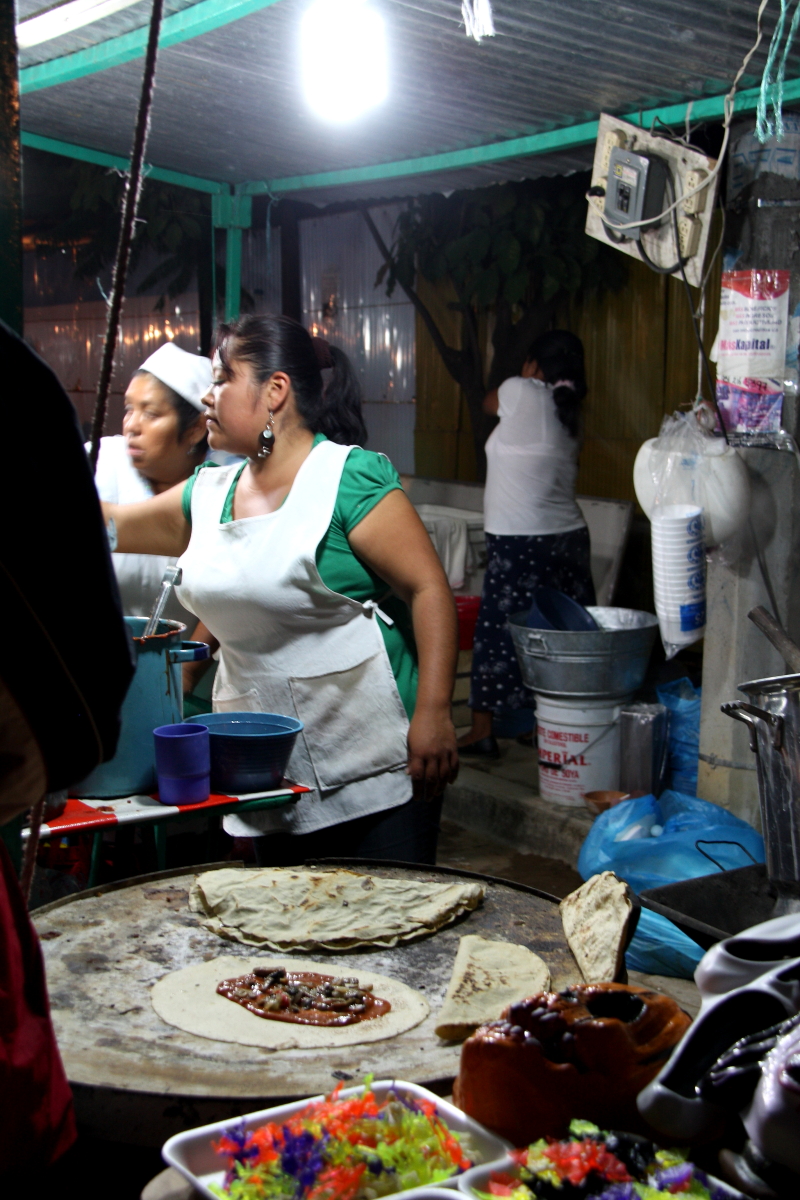
The carnival-like atmosphere is contagious at Xoxo (pronounced ho-ho)! The streets outside the cemetery are filled with live bands, vendors selling mexican favorites, sand art displays and costumed party-goers. I join in by ordering a massive foot-long tortilla stuffed with queso, grilled vegetables, beans and guacamole. To wash it down- I order a cervasa fria!

Every year during the period between October 31st -November 2nd, visitors and locals alike flock to Oaxaca Mexico to attend the colorful Dia de los Muertos festival.  The events range from lively parades (comparsa’s), construction of massive altars for the dead, shopping for decorations at the local markets, to of course the all-night graveyard vigil in xoxo cemetery.

Although this holiday emphasizes remembering and honoring the dead, don’t expect this to be a sad or somber event. This is a fun festive celebration meant to remember the dead, and also to invite them back into our lives once again before they sadly have to depart.

Giant altars for the deceased are constructed using traditional items (ofrendas) that the dead may have enjoyed while alive. Mezcal, cigarettes, chocolate, fruit, and candies are some of the items typically placed on the altar for the dead to enjoy.

Cempasuchitl or bright orange marigold flowers; coined flor de muerto or flower of the dead, can be seen on every altar and grave not to mention spilling out from many table and carts at the markets.   

Fragrant Copal incense is commonly burned in homes and businesses to welcome and purify the souls of the dead. 

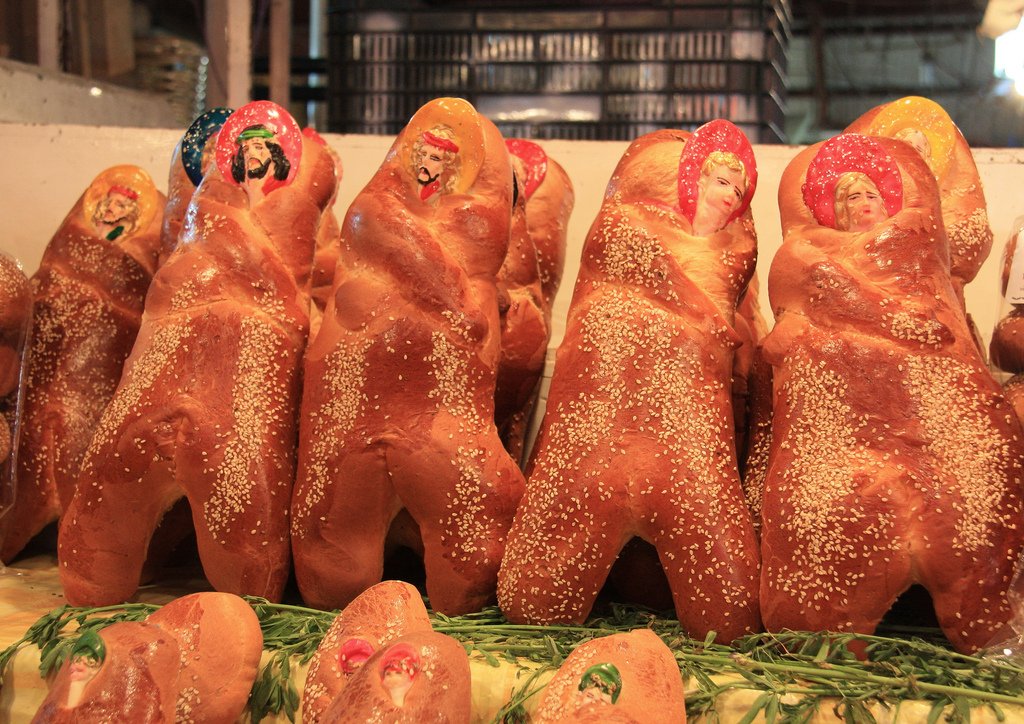
Pan de muerto is placed on altars and also eaten during the week of and after the festival. Pan de muerto (bread for the dead) are big round loaves of freshly baked bread decorated with the faces of skulls or jesus and flower designs.

These colorful and delicious holiday treats are seen lining the shelves and stands of the local markets.

 For a delicious treat visit the Benito Juarez market, near the main square (zocalo) for a hot chocolate and a side of mini pan de muerto.  

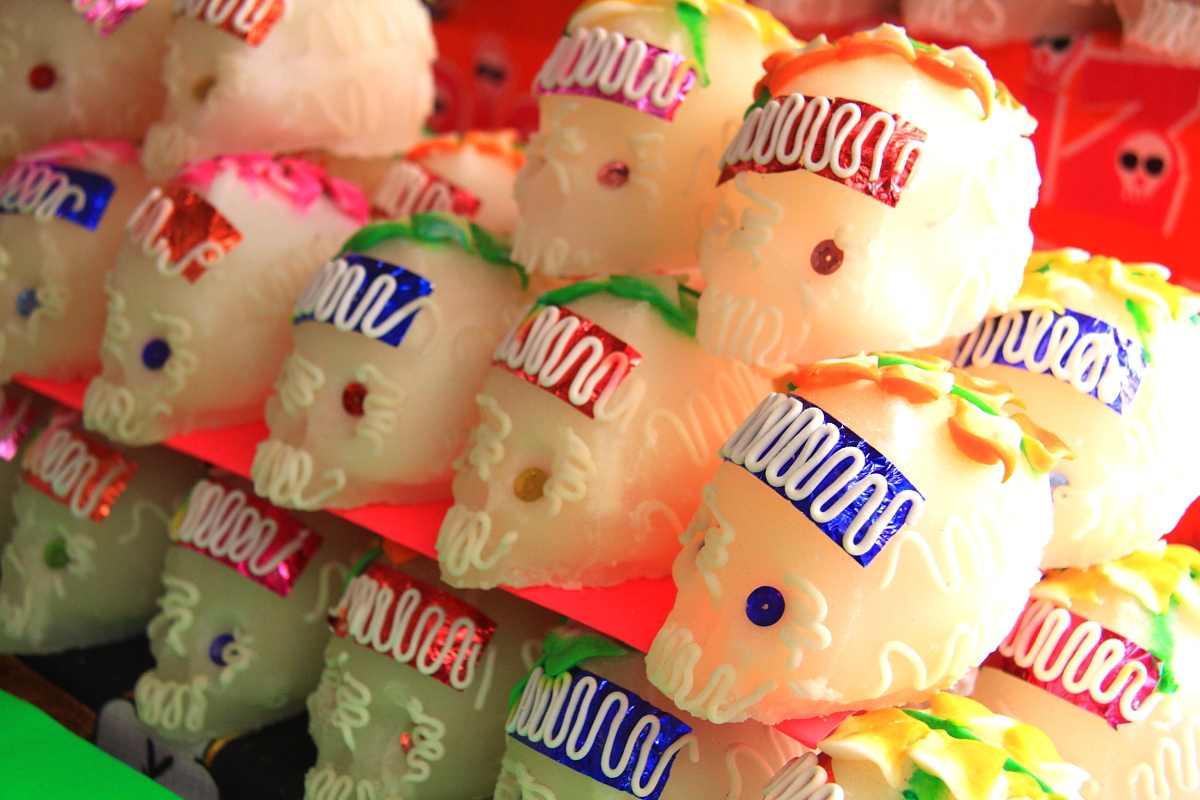
Also at the market, you will find dozens of colorful and decorative sugar and chocolate skull candies.

These candies are meant to be placed on altars and graves rather than as snacks. They make great inexpensive souvenirs to take home for friends and family.  

Visit the  to 20 de Noviembre to watch the kids get ready for the kids parade. Most of the parades, live music, and activities take part in the main Zocalo.   

Locals gather in the main square to construct massive sand art displays that depict various scenes and images of Dia de los Muertos.  Vistors can join in the festivities or relax and watch from one of the surrounding cafes and restaurants that line the perimeter of the Zocalo. 

The most fascinating event is by far the all night vigil at the xoxo cemtery on October 31st.

To read my full travel guide for Oaxaca’s Dia de los Muertos festival- please visit my published article at: 

 
Sugar skulls, marigolds, and mezcal; a guide to navigating the Dia de los Muertos or Day of the Dead festival in Oaxaca, Mexico.

Read more at Suite101: A Guide to the Dia de los Muertos Festival in Oaxaca, Mexico.

Line up With the Locals for a Shot of Ginjinha!

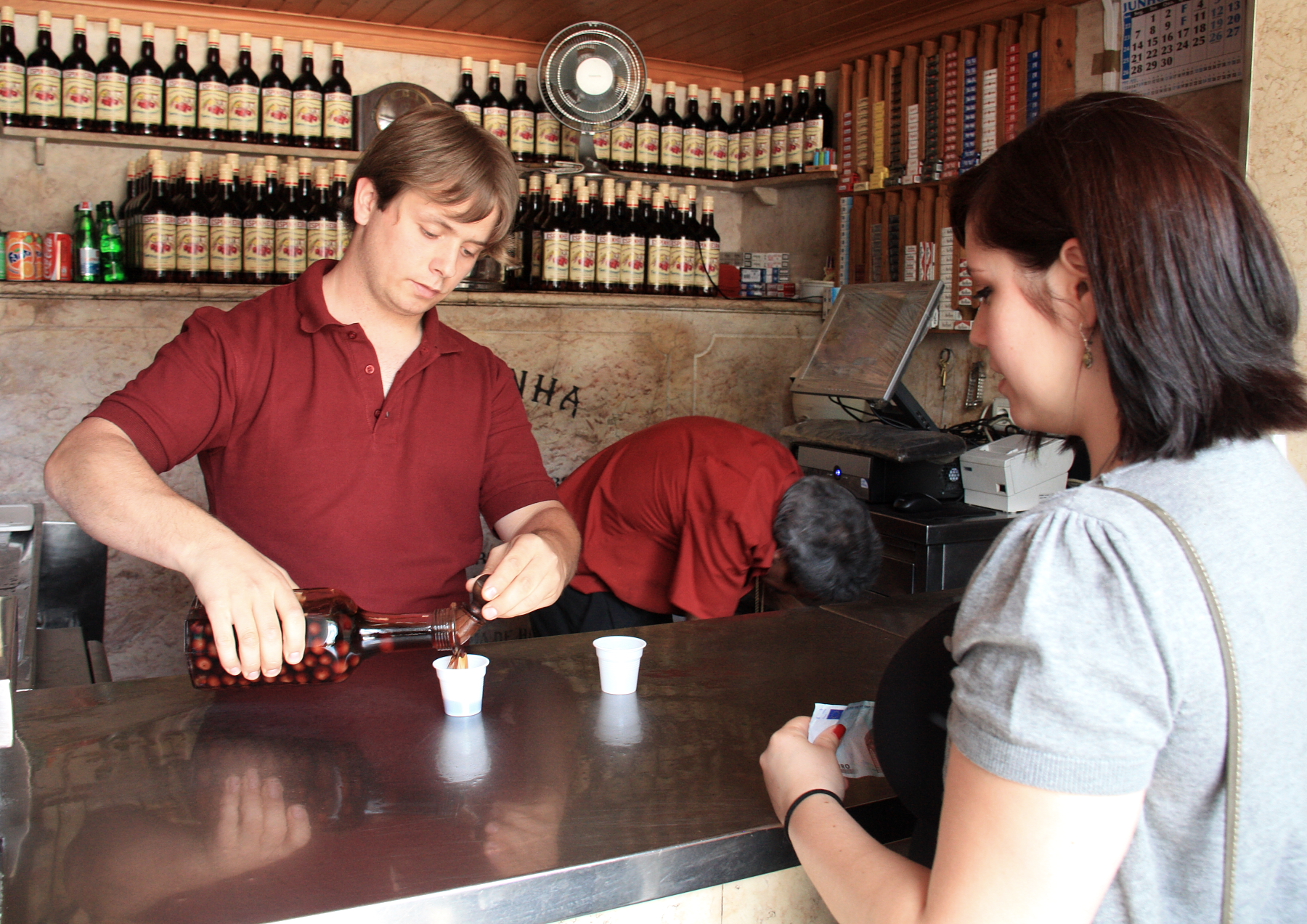
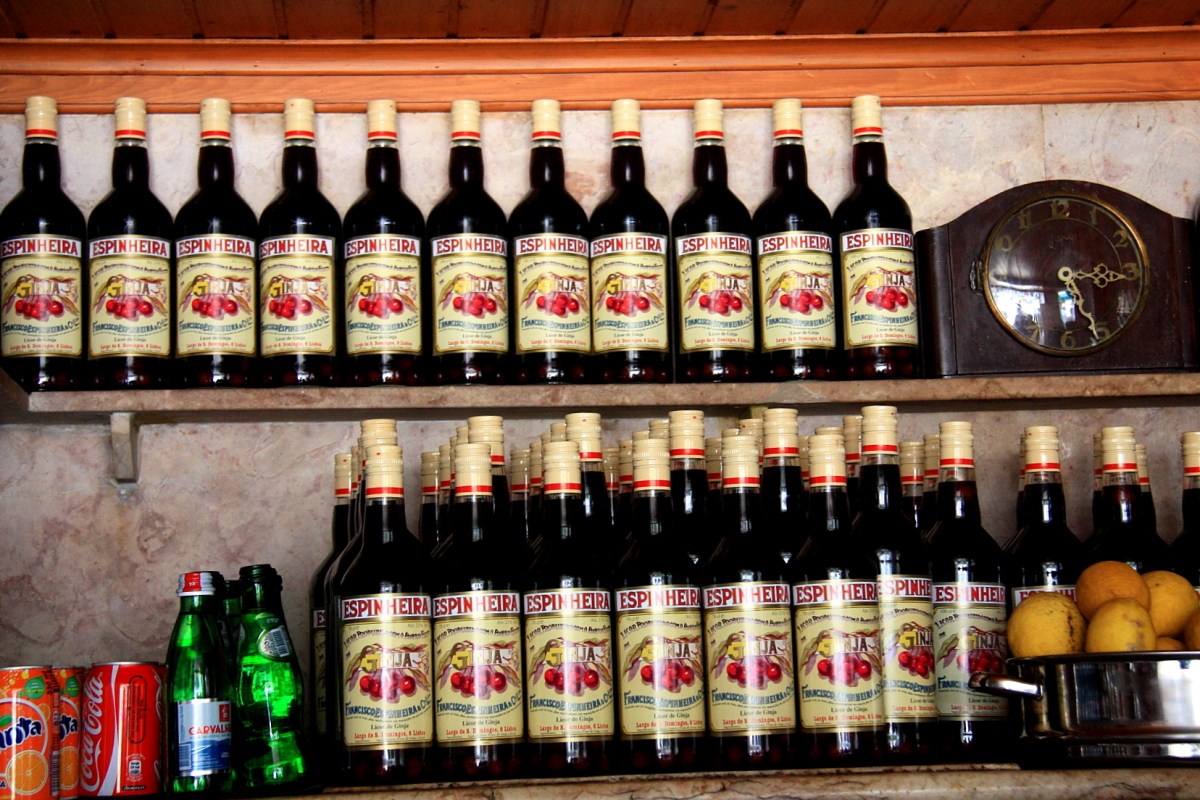
When in Lisbon Portugal, line up with the locals for a shot of Ginjinha; a delicious cherry-flavored brandy.  This flavorful concoction is sweet but tart and is served in a plastic shot glass for 1 euro.  

A-Ginjinha is small storefront shop located at Praca de São Domingos in the trendy Baixa district, that specializes only in this Lisbon favorite. 

This tiny bar can only hold a few customers at a time! So a  crowd gathers as the customers tend to pour out into the square socializing and having fun.   

Anytime is a great time for Ginjinha as customers gather in waves from morning until night making it a great place to mingle with other travelers and locals. Although the drink is served in a shot glass, it is meant to be sipped slowly and enjoyed.  

The hardest decision will be whether to order the drink with a cherry or without.  My vote-definitely with the cherry!

A-Ginjinha is located near the Rossio Metro stop at  Largo de São Domingos 8, 1150 Lisboa, Portugal

Lisbon is one of my favorite places in the world; a modern city set on an old-world stage.  From Ginjinha in Baixa, fresh seafood at the Santo Amaro docks, to Fado in Bairro Alto. Find out where to indulge in the local cuisine and customs of Lisbon.


Read the whole article at Suite101:

Best Places for Local Cuisine and Culture in Lisbon Portugal

Karen Long Neck Hill Tribe of Thailand

Located in the northern most area of Thailand is the culturally rich city of Chiang Mai.  The city is a good base for those heading out on a variety of local tours.

With a number of tour options available for visitors it can be hard to decide which ones are worth your time and money. You can bamboo raft down the Mekong River, catch an elephant show, ride an elephant through the mountains,  or tour the area by ox-cart. Cultural tours to visit the hill tribe people are popular as well. There are seven different hill tribes residing in Thailand including the Karen, Lisu, Lahu, Hmong, Akha, and Mien tribes.

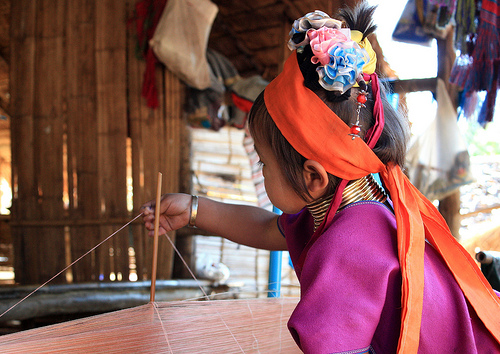
On a recent trip to Chiang Mai, I visited an elephant camp, floated down the river on a bamboo raft and also rode an elephant! all of which was great fun, but the most fascinating component of the tour was the visit to the Karen Long-Neck Tribe. I found out that the Karen Padaung Hill Tribe people are political refugees that fled Burma in the late 80’s and 90’s and were granted asylum in a number of areas of Thailand.  Little villages such as the one depicted in the photo above are located in many areas of Thailand, including Chiang Mai. 

The women in the the Karen Paduang tribe are called “Long-Neck” because they wear brass coils around their necks;  a traditional practice among the tribe dating back long before their arrival in Thailand. The coils serve a decorative purpose and give the illusion of elongating the neck, when it in fact it actually pushes the collar bone down.  Children as young as five are fitted for their decorative coils starting out with one or two brass links, each year adding one or two rings.

There  has been a steady decline in recent years among the younger women in Burma  wearing the coils for both health and social reasons.  However, in Thailand there has been a resurgence of this traditional practice,  possibly due to the need to generate tourism dollars for the tribe.

Keep in mind, visiting any of these villages will not give one much insight into the cultural practices of the tribe. The village is  set up mainly as a tourist attraction to help  generate money and work for the tribes people.

The “village” section that is open to the public consists of rows of stalls selling colorful scarves, purses, clothing and traditional looking handicrafts. The women were friendly and wore beautiful traditional clothing.  

I had mixed feelings about visiting the the village but it’s apparent that tourism is their main source of  a much needed income. Because they are political refugees they are not eligible to attain citizenship in Thailand. Therefore, they do not have the same access to medical care, education, or legal employment as do the citizens of Thailand.  The majority of their income is dependant on tourism. A donation box is located at the entrance of the village where you can leave money to help contribute to education and medical necessities for the village.

A visit to the Karen Tribe is usually part of a longer day tour, usually combined with an elephant trek, the elephant show, a ride on an ox-cart or bamboo rafting down the Mekong river.  The tours are a great way to see a lot of Chiang Mai in a short amount of time and also a way to help funnel money to people who need it.  An interesting day to say the least!

Mush! World’s Best Dog Sledding Adventures

In honor of the upcoming 2011 Iditarod; a grueling dog sled race covering over 1100 miles of the rugged Alaskan terrain, I decided to write about the world’s best dog sled vacations. The best (and cutest dogs) can be found in Iceland, Greenland, Finland and Alaska. 

Sebastian Schnuelle Owner of Blue Kennels


Dog Sledding Tours and Excursions in Alaska

Learn the art of  dog sledding from expert Iditarod musher Sebastian Schnülle; owner of  Blue Kennels. Sebastian offers an 8-day musher course guaranteed to test the limits of  your endurance! Highlights from Sebastian’s long list of achievements are: 2009 Winner of the Yukon Quest; a grueling race that covers over 1000 miles of trails from Whitehorse in the Yukon to Fairbanks, Alaska, 2nd place in the 2009 Iditarod, and winner of the 2007 and 2010 Humanitarian Award for the best cared for dog sled team.

Sebastian along with Iditarod musher Jessie Royer, leads an eight-day mushers training course and dog sled excursion where participants will learn how to drive their very own team of sled dogs. Mushers-in-training will also learn proper care and feeding of the dogs as well as learn how to endure the grueling conditions experienced out on the trail and during a race.

There is no classroom instruction in this course! Trainees will learn in the rugged outdoor setting of the Alaskan wilderness while managing a team of 4-6 sled dogs. Upon successful completion of the week guests will receive a musher certificate and a photo with a lead dog. The tours are offered during the winter season generally from November 15th through April 21st. All lodging, camping supplies, food, equipment and transportation is included.

In the summer, Blue Kennels in cooperation with Coastal Helicopters offers an amazing tour in Juneau Alaska. Small groups of six are taken by scenic helicopter over the Juneau Icefield to the magnificent Herbert Glacier. Once on the glacier visitors will get to meet and hear stories from Iditarod experts Matt Giblin, Jake Berkowitz and Sebastian Schnuelle. The trip would not be complete without a visit to the kennel to meet with over 80 adorable Alaskan Huskies. Afterwards depart on a special dog sled adventure driven by an Iditarod musher over the Herbert Glacier. All warm weather gear and transportation is provided.
One important factor to consider when deciding where to learn dog sledding is the relationship the mushers have with their dogs. You can tell Sebastian really cares for and loves his sled dogs. One key component in training future mushers is how to properly take care of the dogs and he takes this piece very seriously.

Dog Sledding Tours in Iceland

What could be more exciting than dog sledding on a volcano in Iceland? Eskimos offers exciting day trips from Reykjavik to the Myrdalsjökull glacier located on the same range as Eyafjallajökull; the volcano that shut down European air traffic for weeks with a massive ash cloud. The volcano has stopped erupting, but tours are offered on Langjökull glacier as an alternate location.

The adventure begins with a scenic drive through southern Iceland via Super Jeep 4×4; this rugged truck equipped with a snorkel is needed to navigate the icy and sometimes flooded trails leading up to the glacier. Once at the tour headquarters participants are outfitted with warm snowsuits; as the temperature drops significantly once on the glacier. Finally the group is transported higher up onto Myrdalsjökull to meet the furry tour guides.

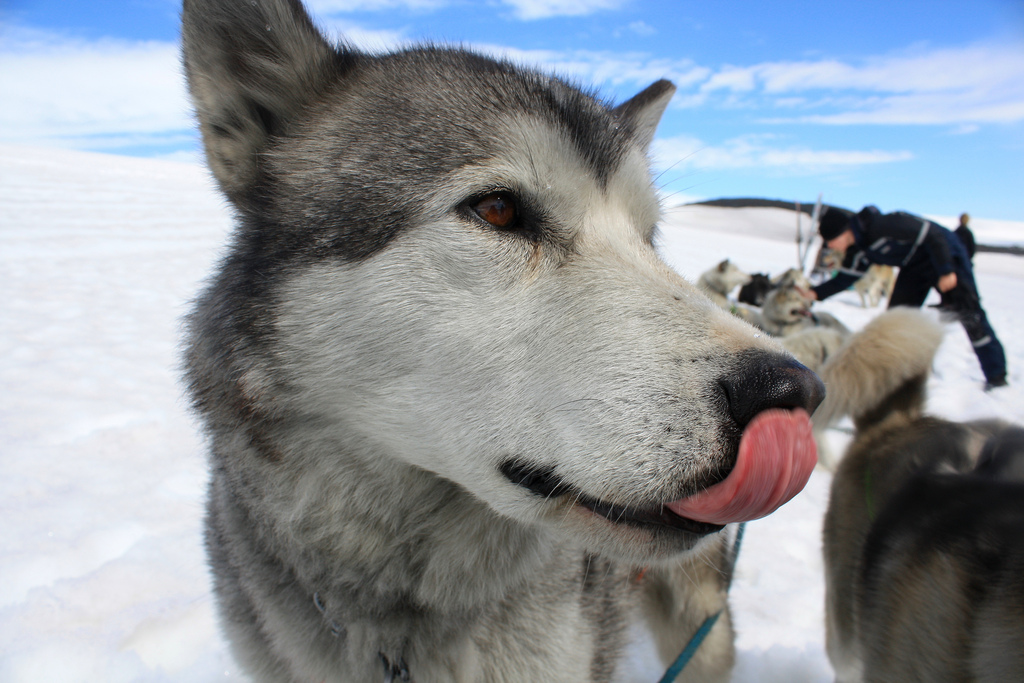
Anxiously waiting at the camp are a team of 12 Greenlandic Huskies; these purebred huskies are friendly but tough dogs, bred to withstand the extreme conditions of the long Icelandic winters. Once onboard the long wooden sled, passengers get to enjoy the view as the two mushers skijor (ski) alongside the sled yelling out the commands; Hike to go forward or Whoa to slow down. Don’t be surprised when the excited huskies pick up some speed! To put the brakes on these wild huskies the musher throws a set of ropes over the front of the sled. If that doesn’t work (it usually doesn’t) they may have to jump onto the front of the sled; the added weight will eventually slow them down. After the ride the best part is meeting and petting each of the dogs. For those looking for a shorter adventure this is a good introduction to the sport of dog sledding.

Tasiilaq Greenland Dog Sledding

Home to the world’s second largest ice sheet; Greenland is a beautiful arctic refuge where the population of huskies actually outweighs that of the human population. For a truly amazing adventure visit the remote village of Tasiilaq Greenland, also referred to as Ammasallik. This tiny village just south of the Arctic circle, is characterized by its brightly colored wooden houses surrounded by a horseshoe of snow-capped mountains.

Dog sledding is not just a fun sport in the hunting and fishing village of Tasiilaq but a much needed method of transportation during the extreme conditions in the winter. What better way to check out the snowy landscape of Tasiilaq than by dog sled? Become a licensed dog musher by completing a two day course guaranteed to teach you everything you need to know to drive your very own team of 6-8 huskies through the snowy tundra. Once licensed your skills will be put to the test with a camping and dog sledding expedition to the outskirts of the region; Ammasalik island. Tour arrangements can be made through Destination East Greenland.

Huskies

Huskies

Eräkeskus Finland Dog Sled Adventure

Become immersed in the world of dog sledding at the Eräkeskus Wilderness Lodge & Huskyfarm; situated in North Carelia, Eastern Finland. Visit the on-site husky farm that houses two large kennels that includes 123 Siberian Huskies, Alaskan Huskies and Scandinavian Hounds. Guests will have fun visiting with this large pack including the adorable husky puppies, adult sled dogs and house dogs. Many different tour options are available to fit all activity levels from beginner to extremely challenging.

Beginners should try the Peaceful Christmas and New Year in Eräkeskus tour. This eight-day adventure includes everything; airport pick-up, lodging in Eräkeskus, all food, and dog sled instruction. Mushers-in-training start with a visit to the kennels to learn about proper care of the sled dogs, then onto the basics of mushing including: Commands, how to hook up the sleds, how to harness the dogs and care on the trail.

Once the instruction is complete the fun starts with a two-day overnight sled dog adventure to a wilderness cabin. Participants will load up the sleds, ration the food for both the pups and mushers, hook up sleds and harness the dogs. Finally each person will learn to drive the sled of 4-6 huskies. Another day is devoted to a snowshoe-hiking excursion in the Koli National Park. Enjoy hiking in the beautiful mountain scenery and along the way stop for lunch cooked on an open fire in a Finnish wind-shelter. Those looking for more of a challenge should sign up for the Eräkeskus Border-Trail which covers distances up to 70 km per day.

Dog sledding captures the very essence of adventure travel. Whether the goal is to take a fun tour or to become a certified dog musher; a visit to one of these arctic wonderlands promises the adventure of a lifetime.